

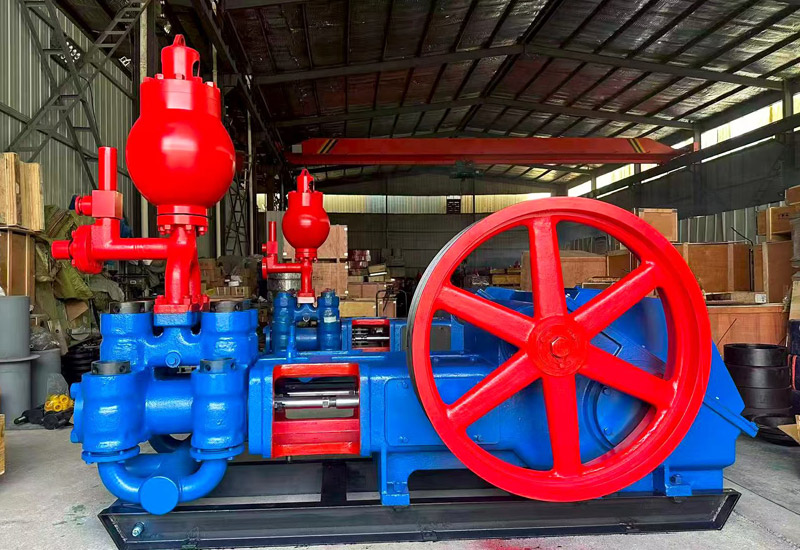
In drilling and well service operations, the mud pump is one of the most critical pieces of equipment in the entire circulation system.
Its job is to move drilling fluid under high pressure, often in harsh, abrasive, and continuous-duty environments.
Because of this, wear resistance is not optional. It is a core performance requirement.
One of the most important components affecting pump durability is the mud pump valve insert.
Choosing the right anti wear mud pump valve insert material can significantly reduce downtime, lower maintenance costs,
improve sealing performance, and extend pump service life.
This article provides a detailed, industry-focused overview of anti wear mud pump valve insert material,
including definitions, material types, performance benefits, selection factors, common specifications, and best practices.
The content is written for SEO-friendly use in blogs, category pages, product directory pages, and industry information pages.
It is designed to help readers understand how the right valve insert material can improve mud pump reliability and long-term operating performance.
A mud pump valve insert is a wear-resistant internal component used in the valve assembly of a mud pump.
It works together with the valve seat to control fluid flow, maintain sealing integrity, and withstand repeated impact and abrasion.
During operation, the valve insert is exposed to high pressure, high-frequency impact, solid particles, and corrosive drilling fluids.
Therefore, its material must provide a combination of hardness, toughness, wear resistance, and chemical stability.
In simple terms, the valve insert acts as a sealing and impact-bearing component that helps the pump operate efficiently.
When the insert wears out too quickly, the valve cannot seal properly, which can lead to leakage, reduced pressure output, fluid loss,
lower drilling efficiency, and premature pump failure. That is why selecting the right anti wear material is essential for long service life.
Mud pumps operate in some of the most demanding industrial environments. The fluid being pumped often contains sand, silt, clay,
and other abrasive particles. These particles continuously attack internal components, especially the valve assembly.
In addition, the pump may face repeated pressure cycles, temperature fluctuations, and corrosive media.
A standard material may perform well in light-duty conditions, but it may fail quickly under drilling conditions.
Anti wear mud pump valve insert material is engineered to resist abrasion, impact, deformation, and chemical damage.
This improves operational stability and reduces the frequency of replacement.
Over time, this leads to lower total cost of ownership, fewer shutdowns, and better equipment utilization.
| Performance Factor | Standard Material | Anti Wear Material | Effect on Pump Life |
|---|---|---|---|
| Abrasion resistance | Moderate to low | High | Longer valve insert life |
| Impact resistance | Limited | Improved | Less cracking and chipping |
| Sealing stability | Declines faster | More consistent | Better pressure retention |
| Corrosion resistance | Variable | Enhanced | Better durability in harsh fluids |
| Maintenance frequency | Higher | Lower | Reduced downtime |
There is no single universal material that is ideal for every mud pump application.
The best choice depends on pressure level, fluid composition, drilling depth, temperature, operating hours, and maintenance expectations.
However, several material categories are widely used across the industry for wear-resistant valve inserts.
Polyurethane is a popular anti wear material because it offers excellent elasticity, impact absorption, and abrasion resistance.
It is often used where repeated impact and moderate abrasive wear are common.
Polyurethane valve inserts can reduce damage from particulate-laden fluids and help maintain a good seal during cyclical operation.
Advantages of polyurethane include flexibility, shock absorption, and relatively low cost compared with some advanced composites.
However, its temperature resistance and chemical resistance may be limited depending on formulation.
It is usually suitable for medium-duty applications and environments where resilience is more important than extreme hardness.
Rubber-based composites are used when sealing performance and resilience are important.
These materials can deform under load and recover quickly, which helps maintain contact with the valve seat.
They are often selected for applications with frequent cycling and variable pressure conditions.
The main benefit of rubber-based materials is their ability to absorb shock and provide reliable sealing.
The main limitation is that pure rubber systems may wear faster than harder composites in very abrasive slurry conditions.
As a result, improved rubber compounds are often reinforced with fillers or layered structures to increase wear resistance.
High-performance engineering plastics such as nylon can be used in certain mud pump valve insert designs.
These materials offer good mechanical strength, reasonable wear resistance, and lightweight performance.
They are commonly used in environments where dimensional stability and cost efficiency are important.
Engineering plastics can work well in moderate abrasive conditions.
In more severe service, they may be combined with other wear-resistant additives or used as part of a composite design.
Their main benefit is balance: they are not as soft as rubber and not as brittle as some hard materials.
Metal matrix composite materials are designed for extreme wear environments.
They combine a metal base with reinforcing particles or phases that improve hardness, abrasion resistance, and thermal stability.
These materials are often considered when service life is a top priority and operating conditions are severe.
Such materials are generally more expensive, but they can offer outstanding durability in aggressive drilling applications.
Their advantage is long-term performance under heavy load and high abrasion.
Their disadvantage may include higher manufacturing complexity and, in some cases, more demanding installation or compatibility requirements.
Carbide reinforcement is used to improve hardness and wear resistance.
In valve insert applications, carbide-based or carbide-reinforced designs can significantly improve resistance to particle erosion.
These materials are well suited to high-pressure mud pumping environments where solid particle impact is constant.
Carbide-reinforced valve inserts are often used where longer service intervals are required.
They may not provide the same flexibility as polymer-based materials, but they excel in hard, abrasive conditions.
Their performance makes them a strong choice for demanding drilling operations.
The right material selection offers multiple operational advantages.
These benefits affect not only the valve insert itself, but the entire mud pump system.
| Benefit | Description | Operational Result |
|---|---|---|
| Reduced abrasion | Resists damage from solids in drilling fluid | Longer component life |
| Improved sealing | Maintains contact with valve seat under pressure | Less leakage and better pump efficiency |
| Lower downtime | Less frequent replacement and inspection | Higher equipment availability |
| Cost savings | Reduces maintenance labor and spare part use | Lower total operating cost |
| Better pressure performance | Supports stable fluid control during pumping cycles | More consistent drilling output |
| Longer pump service life | Protects internal valve system from premature wear | Extended equipment lifespan |
Mud pump service life depends on the condition of its critical wear components.
The valve insert is one of the most heavily stressed elements in the system, so wear failure here can quickly affect the whole pump.
When a better material is used, the insert can resist surface loss, deformation, cracking, and sealing deterioration.
This directly helps extend pump service life in several ways.
First, the valve insert keeps its shape longer, which preserves valve geometry.
Second, stable geometry improves sealing and reduces energy loss.
Third, better wear resistance means fewer replacements, so surrounding components are exposed to less secondary damage.
Fourth, reduced leakage and impact wear help keep the fluid system cleaner and more efficient.
In high-cycle drilling operations, even small improvements in wear resistance can create major results over time.
A valve insert that lasts longer can reduce the frequency of shutdowns, improve performance consistency, and decrease the risk of unexpected pump failure.
For this reason, anti wear material selection is often viewed as a service-life strategy, not just a component choice.
Choosing the right mud pump valve insert material requires a practical evaluation of operating conditions.
No material performs best in every environment.
The following factors are commonly considered by engineers, maintenance teams, and procurement professionals.
| Selection Factor | Why It Matters | What to Look For |
|---|---|---|
| Abrasiveness of fluid | Higher solids content increases wear | Higher hardness and erosion resistance |
| Pressure level | High pressure affects sealing and deformation | Material with strong structural stability |
| Operating temperature | Heat can weaken some polymers and elastomers | Thermal stability and heat resistance |
| Chemical exposure | Drilling fluids may contain corrosive agents | Compatibility with fluid chemistry |
| Cycle frequency | Frequent pumping increases fatigue wear | Fatigue resistance and shape retention |
| Maintenance interval target | Longer service intervals require stronger materials | Extended wear life and reliable sealing |
| Budget and lifecycle cost | Initial cost should be compared with replacement frequency | Best value over total service life |
When evaluating anti wear mud pump valve insert material, technical properties matter more than appearance alone.
Buyers and engineers often compare the following characteristics to determine suitability.
| Property | Meaning | Influence on Performance |
|---|---|---|
| Hardness | Resistance to surface indentation and wear | Improves abrasion resistance |
| Toughness | Ability to absorb impact without cracking | Reduces fracture risk |
| Elastic recovery | Ability to return to original shape after compression | Supports sealing performance |
| Compression set resistance | Resistance to permanent deformation under load | Helps maintain long-term sealing |
| Chemical resistance | Ability to withstand drilling fluid exposure | Prevents material degradation |
| Temperature resistance | Stability under heat | Maintains performance in hot service |
| Fatigue resistance | Ability to tolerate repeated load cycles | Improves service life under continuous operation |
Anti wear mud pump valve insert materials are used across a wide range of drilling and pumping operations.
The exact material choice varies depending on the severity of the application.
In each of these environments, the valve insert must balance sealing ability and wear resistance.
A material that is too soft may seal well but wear out quickly.
A material that is too hard may resist wear but fail to provide the flexibility needed for proper sealing.
This is why material engineering is so important in mud pump component design.
Recognizing wear early can prevent more serious pump problems.
Common signs of valve insert wear include:
When these symptoms appear, the valve insert should be inspected immediately.
In many cases, the problem is not just wear itself, but wear caused by material mismatch, incorrect operating conditions,
or poor maintenance practices.
Better anti wear material can reduce the frequency of these issues, but proper inspection is still essential.
Extending the life of a mud pump valve insert is not only about selecting a better material.
It also depends on correct installation, proper maintenance, and operating discipline.
The following practices can help maximize service life and overall pump reliability.
| Best Practice | Purpose | Expected Result |
|---|---|---|
| Select the right material for the fluid | Match wear resistance to application severity | Better durability |
| Inspect valve components regularly | Detect wear before failure occurs | Fewer unexpected shutdowns |
| Maintain clean fluid conditions where possible | Reduce particle-driven abrasion | Lower wear rate |
| Avoid overpressure operation | Prevent excess mechanical stress | Less deformation and cracking |
| Use compatible replacement parts | Ensure proper fit with valve seat and assembly | Stable sealing and longer life |
| Follow correct installation procedures | Prevent misalignment and premature damage | Improved performance |
| Track service history | Identify wear patterns and recurring issues | Smarter maintenance planning |
The following table provides a general specification overview for anti wear mud pump valve insert materials.
These values are typical reference ranges and should be adapted to the specific operating environment and design requirements.
| Material Type | Wear Resistance | Impact Resistance | Temperature Resistance | Typical Service Use |
|---|---|---|---|---|
| Polyurethane | High | High | Moderate | Medium-duty abrasive service |
| Rubber-based composite | Moderate to high | Very high | Moderate | Sealing-focused applications |
| Engineering plastic | Moderate | Moderate | Moderate to high | Balanced performance service |
| Metal matrix composite | Very high | High | High | Severe wear environments |
| Carbide-reinforced material | Excellent | Moderate to high | High | Extreme abrasion service |
Different anti wear materials solve different operational problems.
If the priority is impact absorption and flexibility, polymer-based materials may be the best choice.
If the priority is maximum abrasion resistance, carbide-reinforced or metal matrix materials may offer better long-term value.
If the priority is stable sealing under repeated cycling, rubber-based composites may perform especially well.
The most successful mud pump programs usually evaluate the entire operating system instead of focusing on one property alone.
For example, a material with excellent hardness but poor elasticity may not seal well enough.
Likewise, a highly elastic material with low wear resistance may require frequent replacement.
The best anti wear mud pump valve insert material is the one that balances durability, compatibility, and performance in the real working environment.
The following related keyword themes are commonly associated with this topic and can support search visibility when used naturally in content:
Its main purpose is to resist abrasion, maintain sealing integrity, and reduce the rate of wear in mud pump valve assemblies.
This helps improve reliability and extend service life.
The best choice depends on the specific application.
Carbide-reinforced materials and metal matrix composites generally offer excellent wear resistance, while polyurethane and rubber-based composites may provide better flexibility and sealing in other conditions.
Wear can reduce sealing efficiency, cause pressure loss, increase leakage, raise maintenance frequency, and shorten the overall life of the mud pump.
Yes. A durable valve insert can reduce replacement frequency, minimize downtime, and lower labor and spare part costs over the life of the pump.
Anti wear mud pump valve insert material plays a central role in pump reliability, efficiency, and service life.
In abrasive and high-pressure environments, the valve insert must provide more than simple sealing.
It must withstand repeated impact, resist erosion, maintain dimensional stability, and continue performing under demanding conditions.
By choosing the right material and applying proper maintenance practices, operators can significantly extend pump service life and improve total system performance.
For industry pages, technical blogs, and directory listings, this topic offers strong SEO potential because it connects directly to widely searched phrases such as
anti wear mud pump valve insert material, mud pump valve insert wear resistance, and extend pump service life.
The key is to provide clear, practical, and technically relevant information that helps readers compare materials and understand the value of wear-resistant pump components.
```
This website uses cookies to ensure you get the best experience on our website.


 Pусский



 WhatsApp
 Phone
Phone
Comment
(0)