

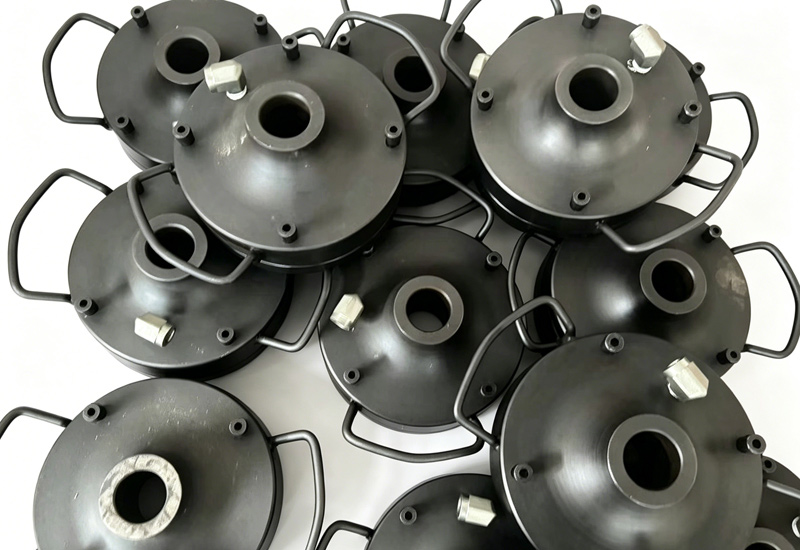
Integrated suction manifold parts are essential components in triplex drilling mud pumps, supporting stable fluid intake, reliable suction performance, and consistent mud circulation in demanding drilling operations. In oilfield drilling, geothermal drilling, mining, HDD, and well service applications, the suction side of a mud pump plays a critical role in maintaining flow efficiency and preventing pressure loss, cavitation, and intake instability. When operators search for integrated suction manifold parts for all triplex drilling mud pumps, they are usually looking for durable, high-pressure, high-flow, and easy-to-maintain components that fit a wide range of mud pump systems without compromising performance.
This page provides a complete industry-focused overview of integrated suction manifold parts, including their definition, main functions, advantages, design features, common materials, specification considerations, and selection factors. The information below is written for SEO-friendly use in blog pages, product category pages, industry pages, and technical content hubs. It is intended to help readers understand the value of integrated suction manifold assemblies, triplex mud pump suction components, and related drilling mud pump parts in a clear and structured format.
An integrated suction manifold is the inlet-side assembly that distributes drilling fluid evenly from the suction line into the three pumping chambers of a triplex mud pump. In a triplex mud pump, three plungers or pistons work in a coordinated reciprocating cycle. The suction manifold ensures that mud, slurry, or drilling fluid enters the pump smoothly and with minimal turbulence. Because the unit is integrated, it is designed as a combined or unified structure rather than multiple loosely connected pieces. This integrated design helps reduce leakage points, improves structural rigidity, and simplifies maintenance.
In practical terms, suction manifold parts may include the manifold body, inlet branches, flanges, seals, gaskets, ports, and mounting interfaces. Depending on the pump model and system design, the assembly may also incorporate suction valves, connection seats, and pressure-rated fittings. The main goal is to deliver a uniform and reliable fluid supply to the pump chambers under severe working conditions.
The suction side of a mud pump is often overlooked, but it directly affects the overall reliability of the drilling fluid system. A weak or poorly matched suction manifold can create flow restriction, uneven feeding, air ingestion, vibration, or cavitation. These issues can reduce pump efficiency, shorten consumable life, and interrupt drilling progress. In high-duty drilling environments, even small intake problems can lead to performance loss and downtime.
High-quality integrated suction manifold parts for all triplex drilling mud pumps help maintain a stable supply of fluid to the pumping chambers, which supports smoother discharge, better pressure consistency, and stronger overall system output. They are especially important when handling abrasive fluids, high-density mud, solids-laden slurries, and deep-well circulation systems.
Choosing the right integrated suction manifold parts provides multiple operational and economic advantages. These benefits are particularly important for oilfield drilling contractors, pump maintenance teams, OEM replacement part buyers, and drilling fluid system integrators.
| Benefit | Description | Operational Value |
|---|---|---|
| Improved intake stability | Supports even fluid entry into all pumping chambers | Reduces cavitation and intake fluctuation |
| Lower leakage risk | Integrated construction reduces connection points | Improves sealing reliability |
| Higher structural strength | Rigid manifold bodies handle demanding service loads | Better durability under vibration and pressure changes |
| Better pump efficiency | Reduced suction loss supports smoother operation | Can improve volumetric performance |
| Easier system integration | Designed for compatibility with common triplex pump layouts | Simplifies installation and replacement |
| Reduced downtime | Reliable intake parts help prevent operational interruption | Supports continuous drilling schedules |
| Long service life | Material and design choices resist wear and corrosion | Lowers total maintenance cost |
Integrated suction manifold components are used wherever triplex mud pumps are required to move large volumes of fluid under challenging conditions. Their application range is broad and covers many industrial drilling sectors.
In each of these applications, the integrated suction manifold must support continuous fluid handling while withstanding abrasive media, fluctuating flow demand, and field maintenance conditions.
A well-designed suction manifold is more than a simple inlet pipe. It is a precision-engineered component that must balance flow capacity, pressure resistance, sealing performance, and compatibility with the pump frame. The following design features are commonly found in quality integrated suction manifold parts.
| Design Feature | Purpose | Typical Advantage |
|---|---|---|
| Large flow passages | Helps move viscous mud and slurry with less restriction | Improves suction efficiency |
| Reinforced body structure | Supports heavy-duty use and pressure fluctuations | Enhances mechanical strength |
| Precision-machined sealing faces | Provides tight joints and reliable fit | Reduces leakage risk |
| Standard flange interfaces | Enables easy connection to piping and pump sections | Improves installation compatibility |
| Corrosion-resistant surfaces | Protects against chemical and moisture exposure | Extends service life |
| Wear-resistant internal geometry | Handles abrasive drilling fluids | Maintains performance over time |
The material selection for integrated suction manifold parts depends on pressure rating, temperature range, fluid chemistry, and abrasion level. In drilling systems, the suction manifold must often tolerate corrosive additives, solids, and long hours of operation. Material choice has a major impact on durability and replacement interval.
| Material | Main Properties | Common Use |
|---|---|---|
| Cast steel | High strength, good toughness, cost-effective | General heavy-duty manifold bodies |
| Alloy steel | Improved mechanical strength and fatigue resistance | High-pressure and severe-service applications |
| Stainless steel | Excellent corrosion resistance | Corrosive fluids and harsh environments |
| Wear-resistant alloy components | Resists erosion and abrasive wear | High-solids mud handling |
| Elastomer seals | Flexible sealing performance | Flange joints, ports, and connection interfaces |
| Composite or polymer inserts | Low friction and chemical resistance in selected designs | Specialized fluid handling systems |
When selecting integrated suction manifold parts for all triplex drilling mud pumps, it is important to evaluate more than just physical fit. Performance depends on the exact operating conditions and the pump’s design parameters. Buyers and engineers should review the following specification factors before making a purchasing decision.
| Specification | Why It Matters | Selection Guidance |
|---|---|---|
| Pump model compatibility | Ensures the manifold fits the specific triplex pump frame | Verify dimensions, flange pattern, and port orientation |
| Suction diameter | Affects flow volume and intake resistance | Choose a diameter that supports required flow rate |
| Pressure rating | Confirms the assembly can handle service conditions | Select a rating above the expected operating load |
| Temperature range | Prevents seal and material failure in extreme conditions | Match the system’s fluid temperature profile |
| Corrosion resistance | Important for chemically treated drilling fluids | Choose suitable alloys or protective coatings |
| Abrasion resistance | Critical for mud with high solids content | Prioritize hardened or wear-resistant materials |
| Maintenance access | Affects inspection and replacement time | Prefer designs with practical service access |
A triplex mud pump relies on stable suction to keep all three chambers properly filled during each cycle. If the suction side is undersized, restricted, or poorly sealed, the pump may suffer from incomplete filling, pressure pulsation, and loss of output. Integrated suction manifold parts support better pump performance by reducing inlet losses and helping the pump receive a more constant fluid supply.
This improvement is especially important in high-viscosity drilling fluids, where a poorly designed inlet can create significant resistance. A well-formed integrated manifold can help maintain volumetric efficiency, reduce mechanical stress on internal parts, and improve the consistency of discharge pressure. Over time, this can contribute to lower operating costs and more predictable system behavior.
Like all critical mud pump components, suction manifold parts experience wear and fatigue over time. Inspection is important because a damaged or degraded intake assembly can quickly affect the entire pump. Common signs of replacement need include:
Regular inspection and timely replacement help protect the pump, reduce secondary damage, and keep drilling operations running smoothly.
Proper maintenance extends the service life of suction manifold parts and helps prevent pump failure. Because the suction system is exposed to abrasive and corrosive drilling media, it should be checked routinely during scheduled service intervals.
In many pumping systems, a traditional suction setup may rely on separate pipes, adapters, and multiple bolted joints. By comparison, an integrated suction manifold uses a more unified design. This can reduce the number of interfaces that need sealing and lower the chance of intake-side problems.
| Aspect | Integrated Suction Manifold | Traditional Suction Setup |
|---|---|---|
| Sealing points | Fewer, more controlled interfaces | More joints and potential leak points |
| Structural rigidity | Generally higher | Depends on assembled parts and supports |
| Installation | Simplified in many applications | May require more alignment work |
| Maintenance | Often easier to inspect as a unified component | May involve more individual parts |
| Flow consistency | Designed for smoother distribution | Can vary depending on piping layout |
| Leak control | Improved through integrated design | More dependent on joint quality |
The phrase for all triplex drilling mud pumps refers to parts that are broadly suitable across multiple triplex configurations, not necessarily universal in a strict one-size-fits-all sense. In real-world procurement, compatibility depends on dimensional matching, pressure class, port size, and mounting layout. However, integrated suction manifold parts are often produced in a range of standardized forms that can support many popular pump series and field setups.
To ensure proper fit, users should confirm:
Selecting the right suction manifold parts begins with a clear understanding of the pump’s working environment. For example, a pump used in abrasive high-solids mud service will need different material and wear characteristics than a pump used in cleaner fluid transfer. Buyers should consider service life, spare part availability, sealing reliability, and operating economy.
A practical selection process includes the following steps:
For search visibility and topic relevance, the following keyword themes are commonly associated with this subject. These terms can be naturally used throughout a blog post, product page, or technical article:
Because drilling systems are exposed to highly variable conditions, technical decisions should always balance performance, maintenance, and total cost of ownership. A suction manifold that is too restrictive may reduce pump fill efficiency, while an oversized or poorly matched assembly can create installation and support issues. The best integrated suction manifold parts are those that provide balanced flow, durable construction, and practical serviceability.
In addition, surface finish quality, casting integrity, machining accuracy, and seal seat condition all influence real-world performance. Even a robust manifold body can underperform if seals are incompatible or if the installation is misaligned. This is why specification control is critical in any drilling mud pump system.
| Attribute | Importance | Common Industry Expectation |
|---|---|---|
| Durability | Must withstand continuous field operation | High |
| Flow efficiency | Affects suction-side performance | High |
| Seal integrity | Prevents leakage and air ingress | High |
| Material quality | Determines resistance to wear and corrosion | High |
| Maintainability | Impacts downtime and service cost | High |
| Compatibility | Must suit the target triplex pump design | High |
Integrated suction manifold parts for all triplex drilling mud pumps are vital for stable intake performance, reduced leakage, improved durability, and reliable fluid distribution in demanding drilling applications. Whether used in oilfield drilling, mining, HDD, geothermal wells, or service rigs, a well-designed suction manifold supports better pump efficiency and more consistent operation. By understanding the function, material options, design features, and specification factors of these components, users can make smarter choices for replacement, maintenance, and system optimization.
For SEO-focused content strategies, this topic offers strong relevance across drilling equipment, mud pump parts, suction-side assemblies, and heavy-duty fluid handling applications. A clear, keyword-rich page built around integrated suction manifold parts can support search visibility while providing useful technical information to engineers, buyers, maintenance teams, and industry readers.
```
This website uses cookies to ensure you get the best experience on our website.


 Pусский



 WhatsApp
 Phone
Phone
Comment
(0)